
The Business Process Outsourcing (BPO) industry has been a significant contributor to the global economy, providing millions of jobs and enabling companies to optimize their operations by outsourcing non-core activities. However, the BPO industry has evolved as a result of the introduction of artificial intelligence (AI). Artificial intelligence (AI) technologies, such as robotic process automation (RPA), natural language processing, and machine learning, have altered the field of work, opening up new career prospects and presenting concerns for employees.
Automation of Routine Tasks
One of the most immediate impacts of AI in the BPO industry is the automation of routine and repetitive tasks. Functions such as data entry, invoice processing, customer support, and basic query handling can now be performed by AI systems with high efficiency and accuracy.
Shift on Roles
While AI automates certain tasks, it also shifts the nature of many jobs in the BPO sector. Employees are increasingly required to develop skills that complement AI technologies, such as problem-solving, critical thinking, and emotional intelligence.
Creation of New Job Opportunities
The integration of AI into the BPO industry is also creating new job opportunities. There is a growing demand for roles related to the development, implementation, and maintenance of AI systems.
Upskilling and Reskilling the Workforce
As AI continues to transform the BPO industry, there is a pressing need for upskilling and reskilling the workforce. Employees must acquire new skills to stay relevant in an AI-driven environment.
AI has an impact on the BPO sector that extends beyond conventional automation. It involves integrating expertise into a range of operations, which improves decision-making and efficiency in general.
AI-driven innovations improve efficiency and expedite procedures, but they additionally set traditional BPO job responsibilities to competition.
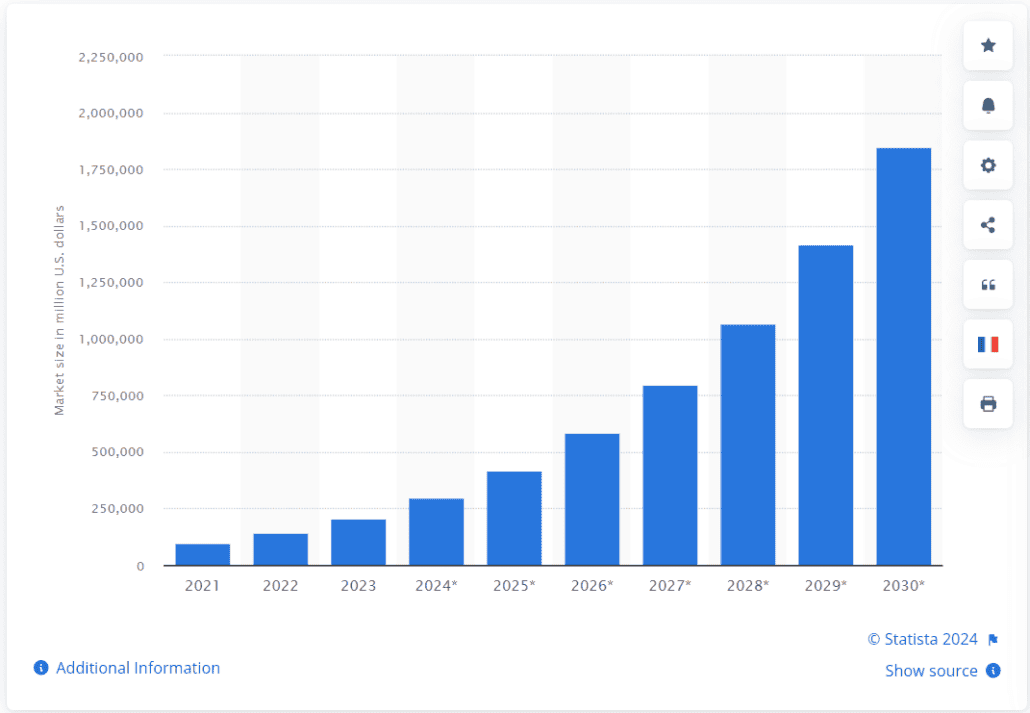
SOURCE: https://www.statista.com/statistics/1365145/artificial-intelligence-market-size/
BPO companies should take a balanced strategy to maximize the advantages of AI while mitigating its risks:
In the BPO sector, artificial intelligence (AI) is a revolutionary force that offers enormous potential for increased productivity, cost reductions, and new career options. But it also brings with it the risk of job loss, skills gaps, and moral dilemmas. Through deliberate navigation of these possibilities and risks, the workforce in BPO can adapt and flourish in an automated future.
AI in the BPO (Business Process Outsourcing) industry is primarily used to automate repetitive tasks, enhance data analysis, improve customer service through chatbots and virtual assistants, and streamline overall operations. AI can handle tasks such as data entry, customer inquiries, and predictive analytics, thereby increasing efficiency and reducing costs.
AI is expected to transform the BPO workforce by automating routine tasks, which will lead to a shift in job roles. Employees may move from performing repetitive tasks to more strategic and analytical roles. This transformation will likely require upskilling and reskilling of the workforce to adapt to new technologies and processes.
Tasks most susceptible to automation by AI in the BPO sector include:
Yes, AI and human workers can coexist in the BPO industry. AI can handle routine and repetitive tasks, freeing human workers to focus on more complex, creative, and value-added activities. This collaboration can lead to increased overall productivity and job satisfaction as employees engage in more meaningful work.
Examples of AI applications in the BPO industry include:
Skills in demand in the future BPO workforce with the rise of AI include: