
Today’s business strategies are built around outsourcing, which gives organizations access to specialized talent pools, cost efficiencies, and operational efficiency. Knowing the environment of global outsourcing destinations is essential as companies go more and more outside of their boundaries to meet their operational demands.
In addition to highlighting some of the leading competitors in the worldwide industry, this comparative analysis investigates key factors driving outsourcing decisions.
Cost Efficiency: One of the primary drivers behind outsourcing is cost reduction. Countries offering competitive labor costs and favorable exchange rates often attract businesses looking to optimize their budgets without compromising on quality.
Skill and Expertise: Access to a skilled workforce is paramount. Outsourcing destinations with strong educational systems, technical expertise, and proficiency in languages required for customer service or technical support are highly sought after.
Infrastructure and Technology: Robust telecommunications infrastructure, reliable power supply, and technological advancement are critical for seamless outsourcing operations, especially in IT services and customer support.
Political and Economic Stability: Stability in governance and economic policies reduces risks for businesses investing in outsourcing relationships. Political instability and fluctuations in economic conditions can disrupt operations and impact service delivery.
Cultural Compatibility and Time Zone Alignment: Cultural affinity and overlapping time zones can facilitate smoother collaboration between outsourcing partners and clients, minimizing communication gaps and operational delays.
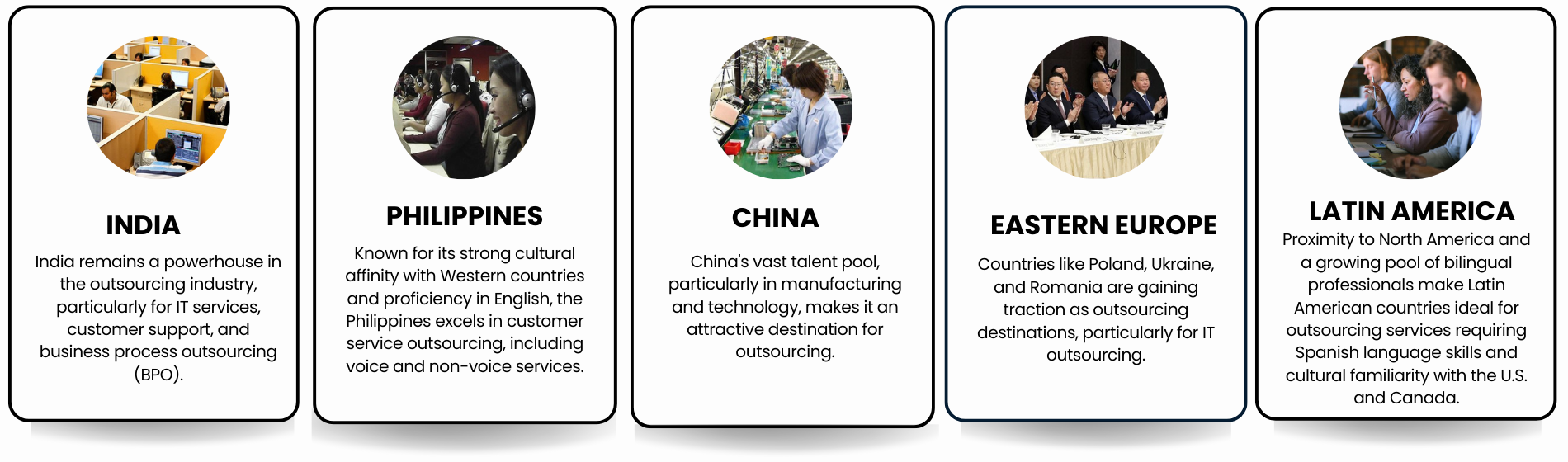
Strengths:
Weaknesses:
Ideal For:
Strengths:
Weaknesses:
Ideal For:
Strengths:
Weaknesses:
Ideal For:
Strengths:
Weaknesses:
Ideal For:
Strengths:
Weaknesses:
Ideal For:
Choosing the right outsourcing destination involves weighing multiple factors, including cost, skill availability, infrastructure, and geopolitical stability. While traditional leaders like India and the Philippines maintain their dominance in certain sectors, emerging destinations in Eastern Europe and Latin America offer compelling alternatives. By understanding these nuances and conducting thorough due diligence, businesses can make informed decisions that align with their strategic objectives and ensure successful outsourcing partnerships.
In subsequent posts, we will delve deeper into each of these destinations, exploring case studies, industry trends, and best practices to guide your outsourcing journey effectively. Stay tuned for more insights on optimizing your global outsourcing strategy!
Remember, the key to successful outsourcing lies not only in cost savings but also in leveraging global talent to drive innovation, efficiency, and growth.